Planetarium
Contact Information:
e-mail: swcplanetarium@swccd.edu
Planetarium Director: Grant J. Miller, Professor of Astronomy
voice: (619) 421-6700 ext. 5535
The Southwestern College (SWC) planetarium will be available for K-12 school visits starting sometime in spring 2026. Please note: planetarium programs are an immersive experience in near total darkness and might not be appropriate for children younger than grade 2. School presentations are approximately 45 minutes long, followed by time for children to ask questions. The planetarium has 72 seats with additional space to accommodate 4 wheelchairs.
Because construction of the planetarium was funded by ballot measure Proposition Z, there is no charge for schools visiting from within the Southwestern Community College District; for schools outside of the SWC District, there is a fee of $5 per person.
Available show times will be:
- Monday-Thursday at 9:00 a.m.
- Mondays & Wednesdays at 10:00 a.m.
Teachers interested in a field trip to the planetarium should contact the planetarium director at swcplanetarium@swccd.edu to schedule their visit.
The new planetarium is still being fitted out with new equipment. Public planetarium shows will resume sometime in 2026. Please check back periodically for updates.
Two breakout sessions for members of the faculty, staff, and administrators will be hosted in the planetarium as part of the spring semester Opening Day activities on 30 January, 2026. Reserve your seat through Cornerstone.
Winter Sky Revealed
See the constellations, Milky Way, and planets visible in this winter’s sky, and get a preview of the spring sky, all part of the limitless wonders of a vast and vibrant universe.Session A: 10:15 a.m. - 11:05 a.m.
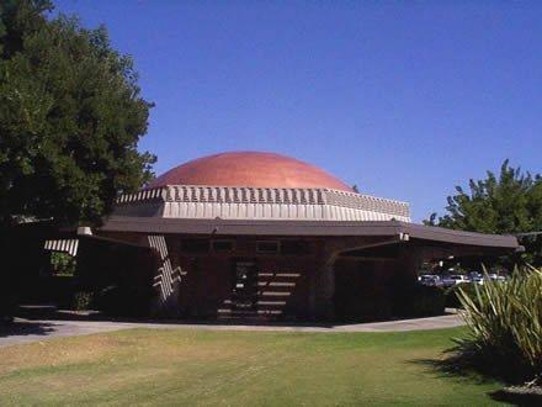
Session B: 11:15 a.m. - 12:05 p.m.The original Southwestern College (SWC) planetarium opened in 1967 with a 30-foot diameter dome and unidirectional seating for an audience of 56. Adjacent to the planetarium was an exhibit hall that included a heliostat--a type of telescope specifically for solar observations--that projected white light images of Sun into the exhibit hall. The exhibit hall included an observing deck on the roof where telescopes were mounted and used for astronomical observations in astronomy lab classes and in public events.

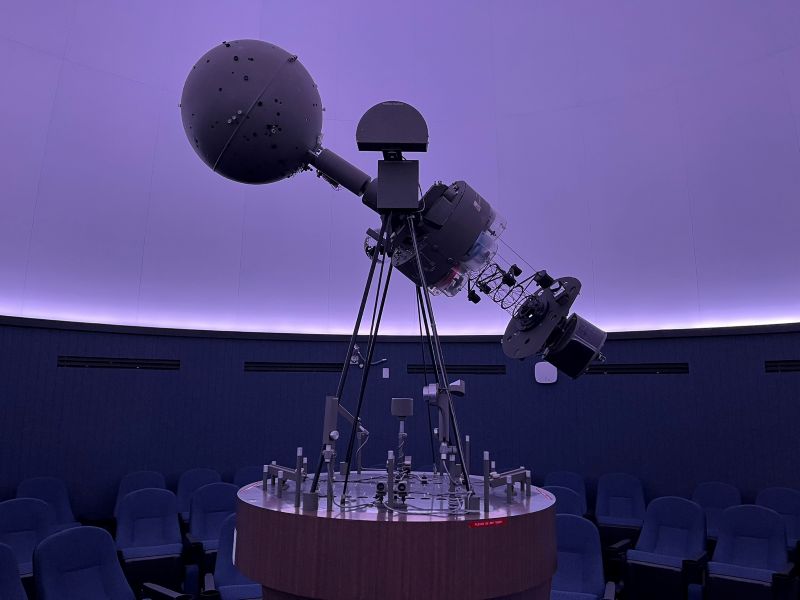
The original planetarium was equipped with a Spitz A3P star projector, which cost approximately $20,900 at the time. The A3P was produced by Spitz, Inc., from 1961 through the early 1970s. The A3P projects roughly 1500 stars, including colors for the brightest stars, the Milky Way, the Andromeda Galaxy, and includes the Sun, Moon, and 5 naked-eye planets, replicating also their apparent motions across the sky. It has various didactic projectors, such as the eclipitic, celestial coordinates, and the local meridian. The projector has several axes of motion that allow it to demonstrate various other apparent celestial motions, such as diurnal and precession motion, or mimic different locations on Earth. The latter of these is useful for teaching celestial navigation. In addition to the 30-foot dome, the original planetarium included a production room and three faculty offices.
From its inception, the planetarium was used to augment the College's astronomy classes. By reproducing not only the appearance of the sky, but also its apparent motions, it helps students conceptualize abstract celestial motions. It also hosted a program of regular public shows spanning topics from seasonal constellations, to space exploration, to archeoastronomy. With the passage of Proposition 13, public funding for community services was eliminated, and the public program was eventually discontinued. However, the planetarium did continue hosting local elementary and middle school field trips.
The SWC planetarium was in continuous operation from 1967 until 2022 when the original buildings were razed to make way for new construction, funded by ballot measure Proposition Z.
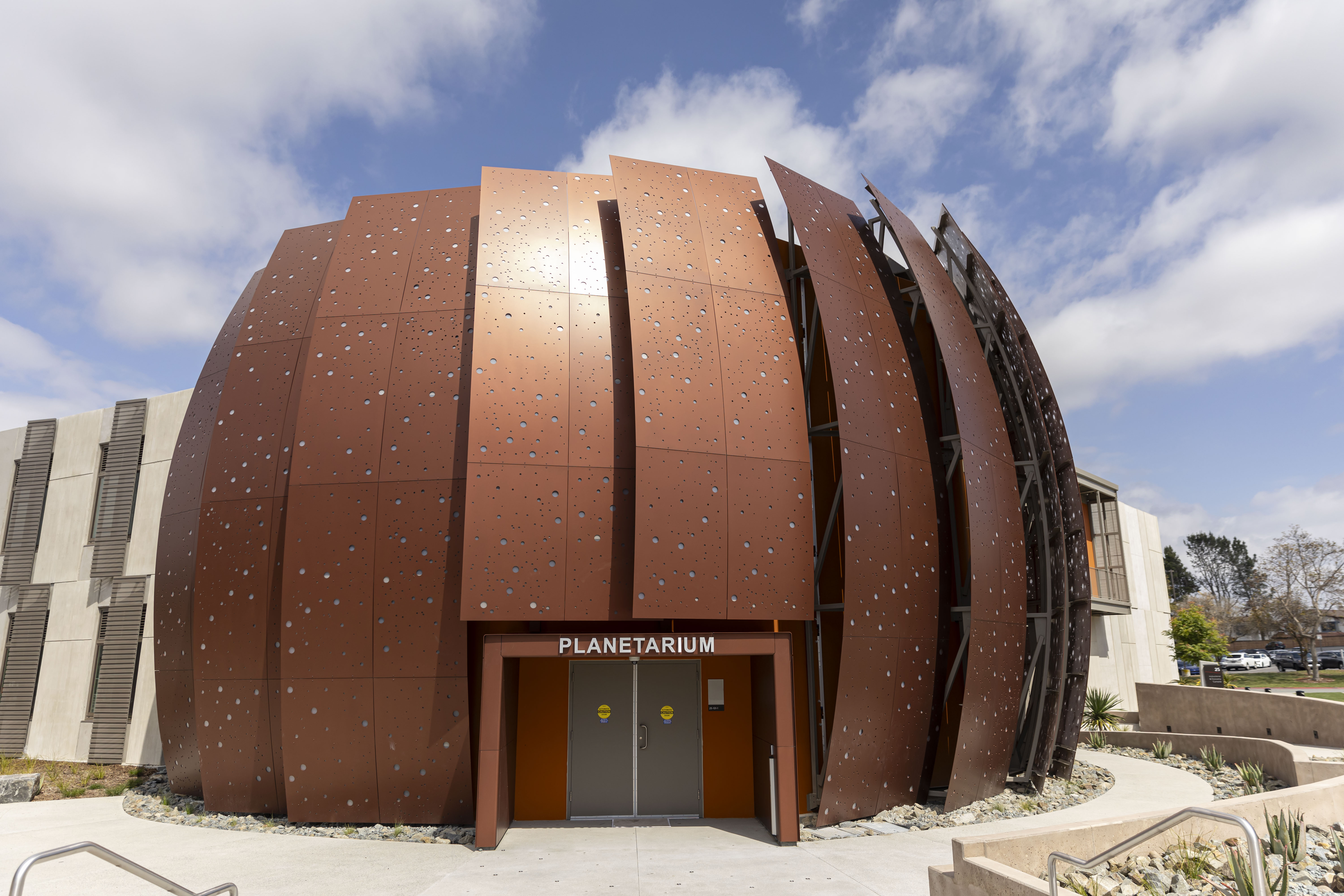
The new SWC planetarium opened in fall 2025 and has a number of improvements over the original planetarium facility: it has a 35-foot diameter dome, concentric seating for an audience of 72 plus room for four wheelchairs, a larger production space, and a small main entrance gallery. It is equpped with a state-of-the-art, full-color, programmable ChromaCove LED cove lighting system, and a robust multi-channel sound system.
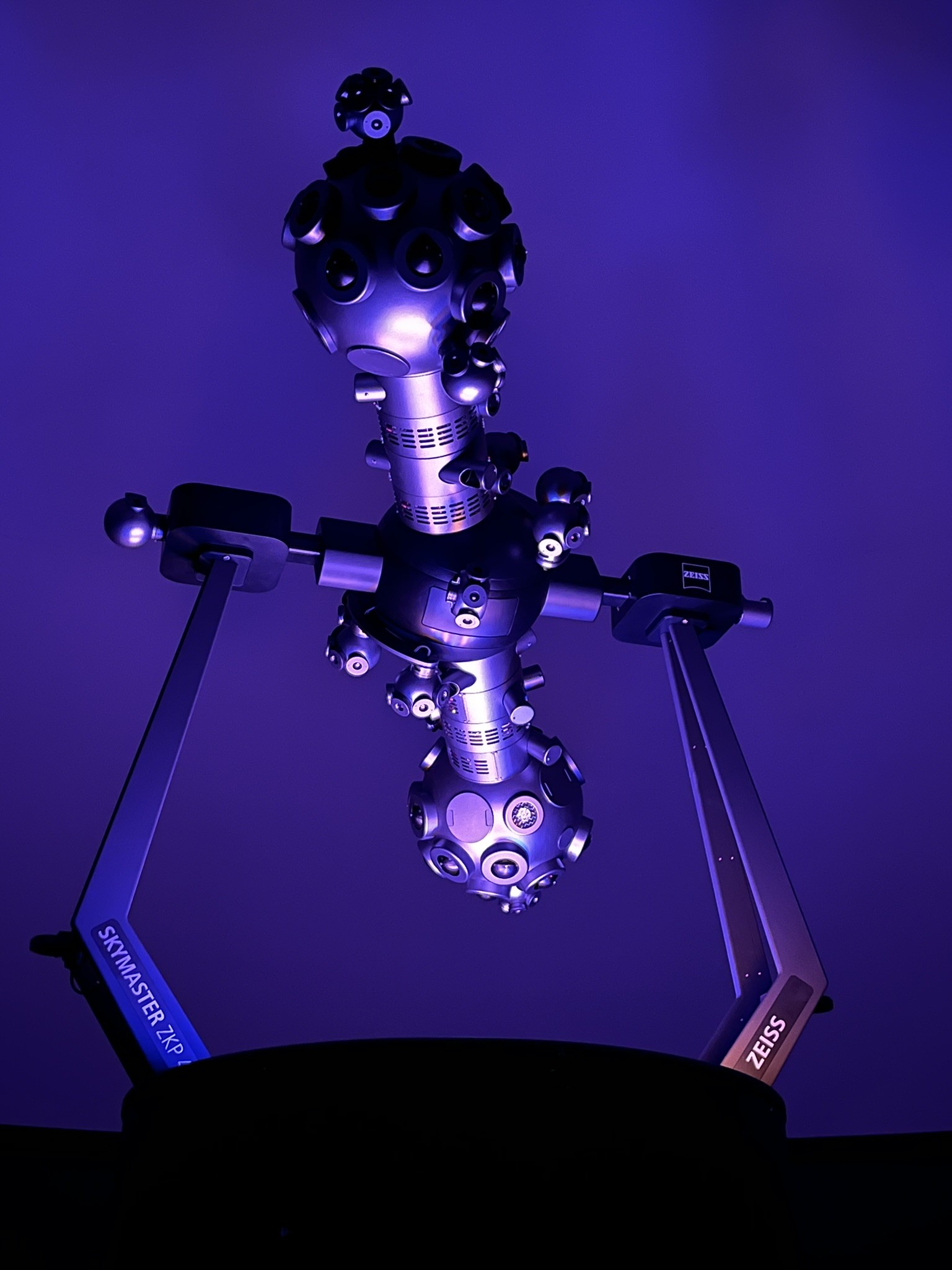
The original Spitz A3P star projector was re-installed into, and is currently being used in, the new dome, but a new Zeiss ZKP-4 LED Skymaster star projector has been purchased using funds from ballot measure Proposition SW. The new projector is currently being built at Carl Zeiss Company in Jena, Germany. Installation of the Zeiss ZKP-4 is anticipated during summer 2026.
Planetarium Directors:
Richard "Dick" Morasso (c. 1965-1975)
Jon Olson (c. 1975-1990)
Grant J. Miller (1993-present)