Coordinated Access Program (CAP)
Coordinated Access Program (CAP) | Expedited Border Crossing for Binational Students | Southwestern College

What is the Coordinated Access Program (CAP)?
The Coordinated Access Program (CAP) is a CBP-led initiative developed in collaboration with participating higher education institutions in the San Diego region, including Southwestern College, San Diego State University, and the University of California San Diego.
The program provides eligible students with access to designated pedestrian crossing lanes at the U.S.–Mexico border to support educational commuting between Mexico and the United States.
CAP is intended exclusively for educational purposes and helps reduce transportation barriers faced by binational students, border commuter students, and international students enrolled at Southwestern College.
Information for students enrolled in Fall 2026
Current CAP Participants
If you participated in CAP during a previous semester, you must obtain the following for Fall 2026:
- A new SWC Binational Enrollment Verification Letter for Fall 2026
- A current Fall 2026 semester sticker from the Student Activities Office
Both documents are required to verify your Fall 2026 enrollment when using the CAP lane.
New CAP Applicants
Southwestern College is continuing to accept applications for the Fall 2026 Coordinated Access Program (CAP). Interested students should submit their applications as soon as possible.
To apply, follow the step-by-step instructions below to obtain the required documents and submit your application through the CBP Link app.
Who Can Participate?
The Coordinated Access Program may be available to:
- U.S. Citizen with a valid U.S. passport or passport card
- U.S. Permanent Resident with a valid I-551 Permanent Resident Card
- F-1 International Student or F-1 Border Commuter Student with a valid passport, F-1 visa, and Form I-20 issued by Southwestern College
Students enrolled exclusively in online courses are not eligible to participate in CAP. You must be enrolled in at least one in-person or hybrid class that requires physical attendance on campus.
Participation in the program remains subject to approval by U.S. Customs and Border Protection.
Information for students under 18
Students under 18 years of age are not eligible to participate in the Coordinated Access Program (CAP) or use the designated CAP lanes.
Once you turn 18, you may apply during a future CAP application period, provided you meet all other eligibility requirements.
Eligible Ports of Entry
CAP currently operates through designated pedestrian lanes at the following Ports of Entry:
San Ysidro Port of Entry
- Monday through Friday, 6:00 AM to 10:00 AM
Otay Mesa Port of Entry
- Monday through Friday, 6:00 AM to 10:00 PM
Required Documents
Students participating in CAP must carry all required documentation each time they cross the border.
Required documents include:
- Valid passport or passport card (if applicable)
- Permanent Resident Card (if applicable)
- Valid F-1 visa and Form I-20 issued by Southwestern College (for F-1 students)
- Southwestern College Student ID with current semester validation sticker
- SWC Binational Student Enrollment Verification Letter for CAP participation
- Proof of approval through the CBP Link App
Failure to present all required documentation may result in denial of access to the CAP lane.
Important Considerations
- Ensure all required documents are valid, current, and readily accessible each time you cross the U.S.–Mexico border using the CAP pedestrian lane
- Maintain full compliance with all applicable federal laws, immigration regulations, and Southwestern College policies governing your immigration status, including lawful permanent resident requirements, if applicable
- Participation in the Coordinated Access Program (CAP) is strictly limited to travel for educational purposes directly related to your enrollment and academic activities at Southwestern College
- Misuse of the program, failure to comply with program requirements, or violations of federal regulations may result in removal from CAP participation and loss of future eligibility for the program
How to Apply
Students interested in participating in the Coordinated Access Program must:
Step 1: Request your SWC Student ID
All participating students must have a valid SWC Student ID. If you do not already have a SWC Student ID, submit your request online through Southwestern College. Processing time is 2-3 business days, after which you will be able to pick up your physical card as instructed in the email confirmation you will receive from the Office of Student Activities.
How to Obtain Your Semester Sticker
You must visit the Student Activities Office (Building 67) at the Chula Vista campus
or any Southwestern College Higher Education Center to request your current semester
sticker in person. This sticker, placed on the back of your SWC Student ID, serves
as official verification that you are actively enrolled in the current semester. Please
ensure you have paid the Student Activity Sticker Fee ($16).
You are required to present your SWC Student ID each time you use CAP. IDs without a valid current semester sticker will not be accepted.
Use this link to request your SWC ID:
Step 2: Request your SWC Binational Student Enrollment Verification Letter
Request an official SWC Binational Student Enrollment Verification Letter. Processing time is 1-2 business days, after which you will receive the letter by e-mail.
Only letters issued by Southwestern College for this purpose will be accepted.
The letter will include a unique authorization code required to apply for CAP.
Use this link to request your letter:
Step 3: Apply through the CBP Link App
To participate in CAP, students must apply through the CBP Link app, available in the Apple App Store and Google Play. The application requires basic personal and document information, along with the authorization code provided in your SWC enrollment verification letter.
After submitting your application, you will receive email updates confirming whether you have been approved.
Download the CBP Link App

CBP Link (Apple Store)
CBP Link (Google Play)
Additional information about the CBP Link Mobile Application
Register for CAP
For step-by-step instructions, visit:
Using the CAP Lane
Hours, Signage, and ProcessHours of Operation
San Ysidro Port of Entry
- The CAP pedestrian lane is located adjacent to the SENTRI pedestrian entrance.
- Monday through Friday, 6:00 AM to 10:00 AM
Otay Mesa Port of Entry
- The CAP pedestrian lane is located near the pedestrian SENTRI access area.
- Monday through Friday, 6:00 AM to 10:00 PM
Signage and Access in Mexico
Clear signage will be posted on the Mexico side of participating ports of entry to
guide students to the designated CAP pedestrian lane. Students should follow all posted
signs directing them to the CAP access point before reaching the International Boundary
Line.
Please check this page for updated information on the exact location of the CAP lane.
Otay Mesa: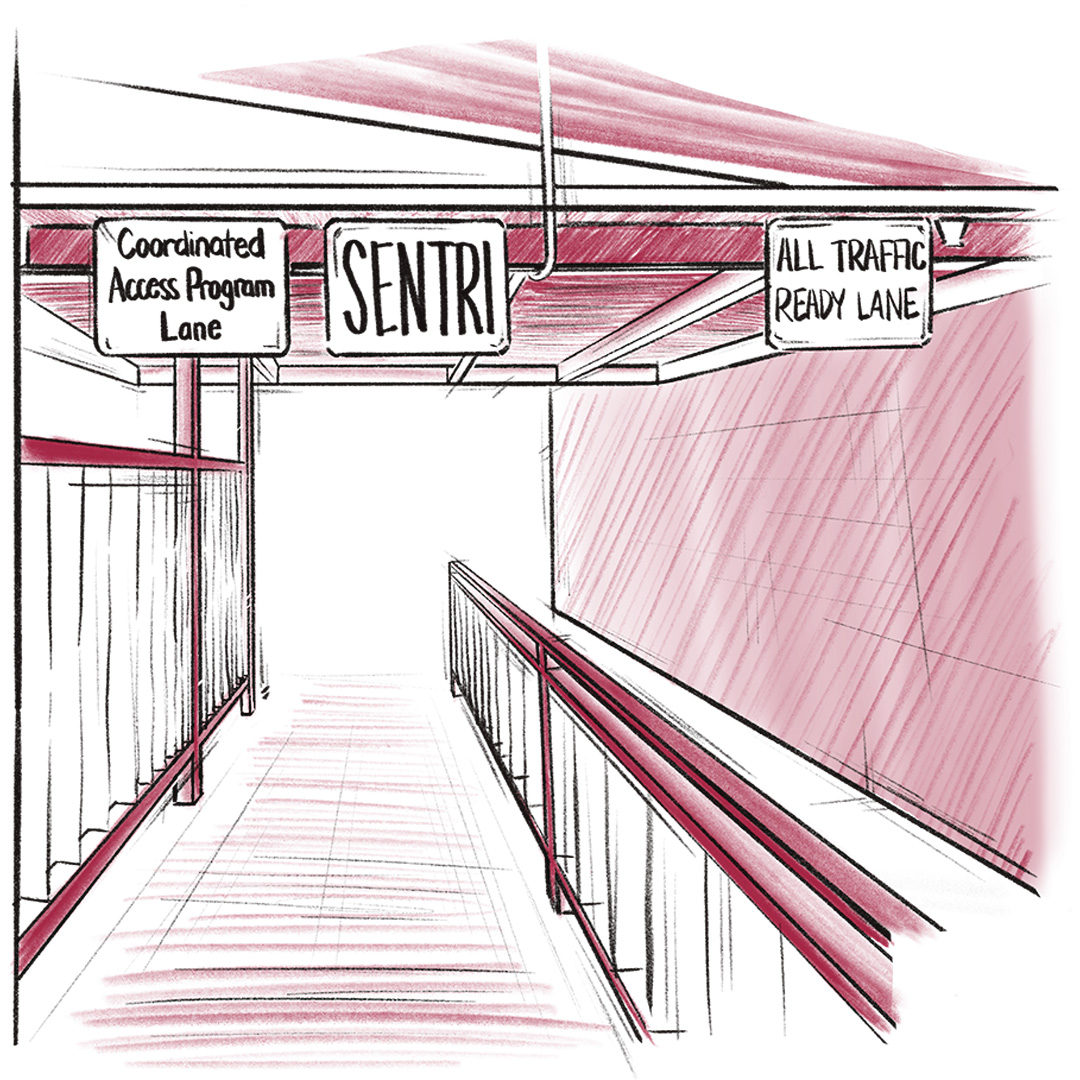
San Ysidro: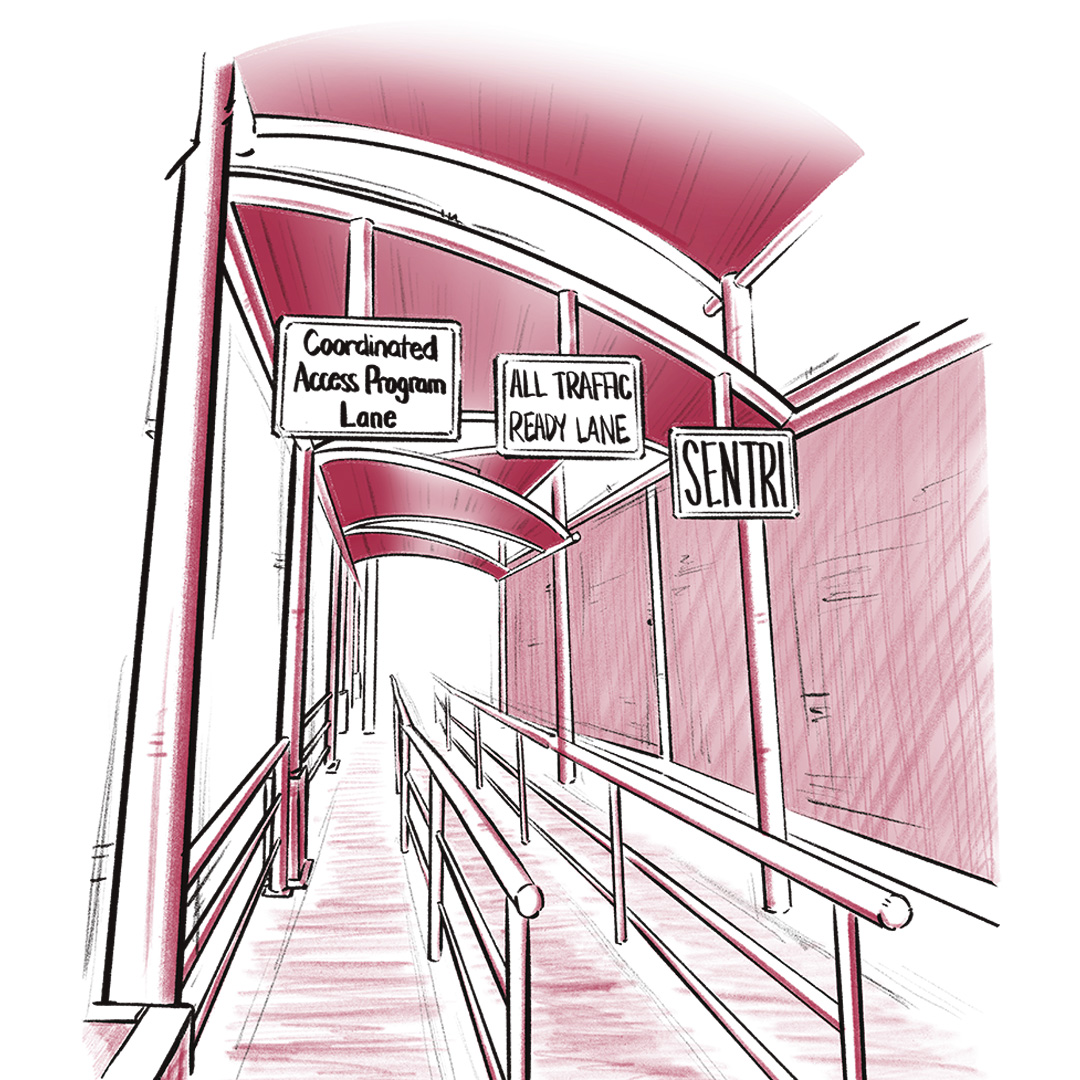
Entry Process
Required Documents
Each time you use the CAP lane, you must present the following:
Proof of Immigration Status
- U.S. Citizens: Valid U.S. passport or passport card
- U.S. Permanent Residents: Valid I-551 Permanent Resident Card
- F-1 International or Border Commuter Students: Valid passport, F-1 visa, and Form I-20 issued by Southwestern College
Additional Required Documents
- SWC Student ID with current semester sticker.
- SWC Binational Student Enrollment Verification Letter
- Proof of CAP approval through the CBP Link app
Crossing Process
Once approved for CAP, follow these steps each time you cross:
- Arrive at the port of entry and follow posted signage in Mexico directing you to the CAP lane
- At the International Boundary Line, present all required documents to the CBP officer
- After initial verification, proceed into the pedestrian facility
- Follow signs to the designated CAP lane
- Complete inspection with a primary CBP officer
Why CAP Matters
Southwestern College serves one of the largest populations of binational students in California. Thousands of students in the CaliBaja region cross the U.S.–Mexico border regularly to pursue higher education opportunities in San Diego County.
The Coordinated Access Program helps support:
- Student access and educational equity
- Reduced border commuting barriers
- Increased student retention and persistence
- Improved access to in-person instruction and campus services
- Stronger cross-border educational collaboration
CAP represents a historic collaboration between higher education institutions and federal agencies to support students who live and study across borders.
Frequently Asked Questions
Questions about CAP?