Pregnancy and Related Conditions

Welcome to the Pregnancy & Related Conditions webpage at Southwestern Community College! Here, you’ll find essential tools and information to help you succeed and thrive as a valued member of our Jaguar Community. We are committed to fostering a supportive, inclusive environment free of discrimination, harassment, and retaliation. More than that, we strive to build a community of belonging and acceptance where everyone feels empowered to achieve their goals. Explore these resources and know that we are here to support you every step of the way.
Campus Resources
- Title IX of the Education Amendments of 1972 provides for equal educational and employment
opportunities for students, staff, and faculty who are pregnant, experiencing pregnancy-related
conditions, and/or menopausal.
- Title IX prohibits educational institutions from discriminating against students and
employees based on the following statuses: pregnancy and related conditions, menopause,
false pregnancy, recovery from related conditions, childbirth, parental, marital,
and family status.
- Title IX prohibits educational institutions from discriminating against students and
employees based on the following statuses: pregnancy and related conditions, menopause,
false pregnancy, recovery from related conditions, childbirth, parental, marital,
and family status.
- The Pregnancy Discrimination Act (PDA) was enacted in 1978 as an amendment to Title
VII of the Civil Rights Act of 1964. It explicitly prohibits workplace discrimination
on the basis of pregnancy, childbirth, or related medical conditions.
- Under the PDA, an employer must treat a pregnant employee who is temporarily unable to perform her job duties in the exact same manner as they would treat any other employee with a temporary or short-term disability. This means if the employer provides modified tasks, alternative assignments, disability leave, or unpaid leave to other temporarily disabled staff, they must extend those same options to pregnant employees.
- Title IX of the Education Amendments of 1972 provides for equal educational and employment
opportunities for students, staff, and faculty who are pregnant, experiencing pregnancy-related
conditions, and/or menopausal.
Pregnancy or related conditions:
- Pregnancy and Related Conditions: This includes pregnancy, childbirth, termination or loss of pregnancy, and lactation.
- Related Medical Conditions: These include, but are not limited to, pregnancy-related fatigue, dehydration, nausea, anemia, bladder dysfunction, gestational diabetes, preeclampsia, and prenatal or postpartum depression.
- Menopause: Conditions such as increased body temperature and other related symptoms are recognized as medical conditions entitled to reasonable accommodation.
- Recovery: Time needed for recovery from any of the conditions listed above.
- Parental Status and Bonding: Status as a biological, adoptive, foster, or stepparent, or legal guardian, including time for baby bonding under California Family Rights Act (CFRA)/Family and Medical Leave Act (FMLA).
Discrimination on the basis of sex: includes discrimination on the basis of sex stereotypes, sex characteristics, pregnancy or related conditions, sexual orientation, and gender identity.
Under District policy and applicable state and federal law, related medical conditions include but are not limited to:
- Pregnancy & Childbirth Conditions: Pregnancy-related fatigue; dehydration (or the need for increased water intake); nausea (or morning sickness); anemia; bladder dysfunction; gestational diabetes; preeclampsia; hyperemesis gravidarum (severe nausea and vomiting); and pregnancy-induced hypertension (high blood pressure).
- Menopause & Perimenopause: Including increased body temperature (hot flashes), sleep disturbances, and other related physical or cognitive symptoms that may require reasonable accommodation to ensure equal access to work or education.
- Reproductive & Recovery Events: Infertility and fertility treatments; recovery from childbirth, miscarriage, or abortion; ectopic pregnancy; and prenatal or postpartum depression.
- Lactation Conditions: Including the need for regular expression of milk, as well as medical issues such as swelling or leaking of breast tissue, or mastitis.
- Other Related Conditions: Any other medical condition that is caused by, exacerbated by, or associated with menopause, pregnancy, childbirth, or termination of pregnancy.
Parental status means: The status of a person, who with respect to another person who is under the age of 18 or who is 18 or older but incapable of self-care because of a physical or mental disability, is:
- A biological parent; adoptive parent; foster parent; or stepparent;
- legal custodian or guardian;
- In loco parentis with respect to such person; or
- Actively seeking custody, guardianship, visitation, or adoption of such a person.
Retaliation under Board Policy 3430: Prohibition of Harassment, Board Policy 3410: Nondiscrimination, or Board Policy 3433: Prohibition of Sexual Harassment under Title IX is strictly prohibited. Retaliation is an adverse action against a person based on their report or other disclosure of alleged prohibited conduct, or their participation in, refusal to participate in, or assistance with the investigation, reporting, remedial, or disciplinary processes provided for in these policies.
An adverse action is conduct that would discourage a reasonable person from reporting prohibited conduct or participating in a process provided for in these policies, such as threats, intimidation, harassment, discrimination, and coercion. Good faith actions lawfully pursued in response to a report of prohibited conduct (such as gathering evidence) are not, without more, retaliation.
As a student experiencing pregnancy or related conditions at SWC, you are entitled to reasonable modifications to SWC’s policies, practices, or procedures as necessary to prevent sex discrimination and ensure equal access to your education program and other activities you participate in at SWC. Each reasonable modification must be based on your individualized needs.
You will contact Disability Support Services (DSS) to meet with a DSS Specialist who will be able to work with you to determine what reasonable modifications you may need based upon your individualized needs. You can set up a meeting with a DSS Specialist in the following ways:
Email: dss@swccd.eduVoice: (619) 421-6700In person: Student Services Center, Building 68, 1st FloorReasonable modifications may include, but are not limited to:
- Breaks during class to express breast milk, breastfeed, or attend to health needs associated with pregnancy or pregnancy-related conditions, including eating, drinking, or using the restroom.
- Intermittent excused absences to attend medical appointments.
- Access to online or homebound education.
- Changes in schedule or course sequence.
- Extensions of time for coursework and rescheduling of tests and examinations.
- Allowing a student to sit or stand, or carry or keep water nearby.
- Counseling.
- Changes in physical space or supplies (for example, access to a larger desk or a footrest).
- Elevator access.
- Other changes to policies, practices, or procedures.
Voluntary Access to Separate and Comparable Portion of Program or Activity: A student must be allowed to voluntarily access any separate and comparable portion of a district education program or activity provided that the separate portion is comparable to that offered to students who are not pregnant and do not have related conditions.
Voluntary Leave of Absence: You may take a voluntary leave of absence from your education program or any activity for a period of time deemed medically necessary by your licensed healthcare provider. To the extent you qualify for leave under a different leave policy maintained by the district that allows a greater period of time than the medically necessary period, you are permitted to take that time if you so choose. When you return to your education program, you will be reinstated to the status you held before your leave began, as practicable.
Lactation Space: SWC will ensure that you can access a lactation space, which must be a space other than a bathroom, that is clean, shielded from view, free from intrusion from others, and may be used for expressing breast milk or breastfeeding as needed.
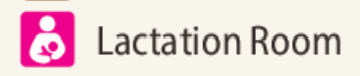
Look for this symbol in the map key for the exact location of each lactation room on each SWC campus:
Limitation on supporting documentation: When you are in the process of seeking and acquiring reasonable modifications due to pregnancy or a related condition, SWC cannot require you to provide supporting documentation unless the documentation is necessary and reasonable for making a determination regarding reasonable accommodations and additional specific actions.
Supporting documentation is not necessary for the following reasonable accommodations:
- a bigger uniform
- carry or keep water nearby
- a bigger desk
- be able to sit or stand as necessary
- take breaks to eat, drink, or use the restroom
- break(s) to attend to lactation needs
Comparable treatment to other temporary medical conditions: SWC must treat pregnancy or related conditions in the same manner and under the same policies as any other temporary medical conditions with respect to any medical or hospital benefit, service, plan, or policy the district administers, operates, offers, or participates in with respect to students admitted to the district’s education program or activity.
Certification to participate: SWC cannot require you to provide certification from a healthcare provider or any other person indicating that you are physically able to participate in a class, program, or extracurricular activity unless:
- The certified level of physical ability or health is necessary for participation in the class, program, or extracurricular activity,
- Certification is required of all students participating in the class, program, or extracurricular activity, and
- The information obtained is not used as a basis of discrimination.
Staff (including student employees) who may need resources in your employment because you are pregnant or related conditions should contact your supervisor or Human Resources (HR) at swcada@swccd.edu. You will meet with your Supervisor or HR to determine what reasonable modifications you may need based upon your individual needs. If you are having difficulty receiving timely support and resources or feel you are being discriminated against or harassed on the basis of your status as a pregnant person or due to a pregnancy-related condition, please contact:
Title IX & EEO OfficerChela CholulaOr submit a complaint by using one of our forms on our Title IX & EEO website.
Lactation Spaces: SWC provides lactation spaces on campus that are clean, shielded from view, free from intrusion from others, and may be used for expressing breast milk or breastfeeding as needed.
Look for this symbol in the map key for the exact location of each lactation room on each SWC campus:
Limitation on supporting documentation: When you are in the process of seeking and acquiring reasonable modifications due to pregnancy or a related condition, SWC cannot require you to provide supporting documentation unless the documentation is necessary and reasonable for making a determination regarding reasonable accommodations and additional specific actions.
Supporting documentation is not necessary for the following reasonable accommodations:
- a bigger uniform
- carry or keep water nearby
- a bigger desk
- be able to sit or stand as necessary
- take breaks to eat, drink, or use the restroom
- break(s) to attend to lactation needs
Faculty who may need resources in your employment program and activities because you are pregnant or experiencing pregnancy related conditions should contact your Department Chair, Dean’s Office, or Human Resources (HR) at swcada@swccd.edu. You will meet with your Supervisor or HR to determine what reasonable modifications you may need based upon your individualized needs. If you are having difficulty receiving timely support and resources or feel you are being discriminated against or harassed on the basis of your status as a pregnant person or due to a pregnancy-related condition, please contact:
Title IX & EEO Officer
Chela Cholula
swcertix@swccd.eduOr submit a complaint by using one of our forms on our Title IX & EEO website.
Lactation Spaces: SWC provides lactation spaces on campus that are clean, shielded from view, free from intrusion from others, and may be used for expressing breast milk or breastfeeding as needed.
Look for this symbol in the map key for the exact location of each lactation room on each SWC campus:
The Pregnancy Toolkit is a resource- and education-based suite of documents. It is 100% voluntary and is not mandatory or punitive. Its primary goal is to provide clear guidance and standardized templates to help navigate accommodations without guesswork.
Employee - Pregnancy & Parenting Related Workplace Accommodation Plan (PDF)
Supervisor Guidance Sheet for Employees (PDF)
Pregnancy & Parenting Rights (PDF)
The Title IX & EEO Officer has delegated specific duties to specific designees on campus in accordance with the Title IX regulations to appropriately coordinate efforts to comply with Title IX. Please use the links below to determine where to go to receive support if you are a student, staff member, or faculty member at SWC.
The Title IX & EEO Officer retains ultimate oversight over these responsibilities to ensure consistent compliance with all responsibilities under Title IX. If you are having difficulty receiving timely support and resources or feel you are being discriminated against or harassed on the basis of your status as a pregnant person or due to a pregnancy-related condition, please contact:
Title IX & EEO provides support to students, staff, and faculty to ensure full access and participation in education, employment, and district services and programs.
If you have a general question about Title IX’s protections regarding pregnancy or related conditions, please email us at swcertix@swccd.edu.Title IX also has the authority to respond to reports of discrimination related to pregnancy and parenting.
To report a possible incident of discrimination, please visit our Title IX & EEO website and select the following form: Discrimination, Harassment and Retaliation.
Please use the link below to access relevant policies which include information about pregnancy and related conditions.
Board Policy 3410: Nondiscrimination
Board Policy 3430: Prohibition of Harassment
Board Policy 3433: Prohibition of Sexual Harassment under Title IX
Visit the CARE webpage for more information about resources for students who are parents. The Cooperative Agencies Resources for Education (CARE) is a program provided by the State of California to assist single parents who are attending college.
Other federal and state laws also protect pregnant employees from discrimination. Please click on the links below for resources and information on this topic:
- Providing Urgent Maternal Protections for Nursing Mothers Act (the PUMP Act)
- Pregnant Workers Fairness Act (PWFA)
- Federal Pregnancy Discrimination Act
- Pregnancy rights under the California Fair Housing & Employment Act
- The Pregnant Scholar: Resources for Pregnant Students, Post Docs, and Faculty
- San Diego Postpartum Health Alliance
- California Department of Public Health: Breastfeeding Initiative
- California Breastfeeding Coalition: Lactation Rights
- Civil Rights Department: Your Rights and Obligations as a Pregnant Employee
- Civil Rights Department: Family Care & Medical Leave & Pregnancy Disability Leave
- FLSA: Pump at Work
- The Pregnant Scholar: Protections for Lactating Students (PDF)
- U.S. Breastfeeding Committee (USBC): Workplace Guide